UGC Jobs: Where to Find Them and How to Land Them in 2026

UGC jobs let creators of all sizes get paid for content, no big following required.
UGC jobs might be the most accessible way to get paid as a creator right now. You don't need a huge following, you don't need to be famous, and brands are actively hiring for this work every single day. What you do need is to know where to look and how to pitch, because the creators winning these gigs aren't necessarily the most talented. They're the ones who show up in the right places with the right materials.
What are UGC jobs? UGC jobs are paid gigs where a brand hires you to create content (usually short videos or photos) for the brand to post on its own channels and ads. You're paid per deliverable, not for your reach, which is why UGC jobs don't require a large following.
If you're brand new to this world, start with our guide on what a UGC creator actually is. Quick version: UGC creators make content that brands post on their own channels. The brand is paying for your content, not your audience. That's exactly why follower count barely matters here.
Now let's talk about finding the work.
Where to Find UGC Jobs
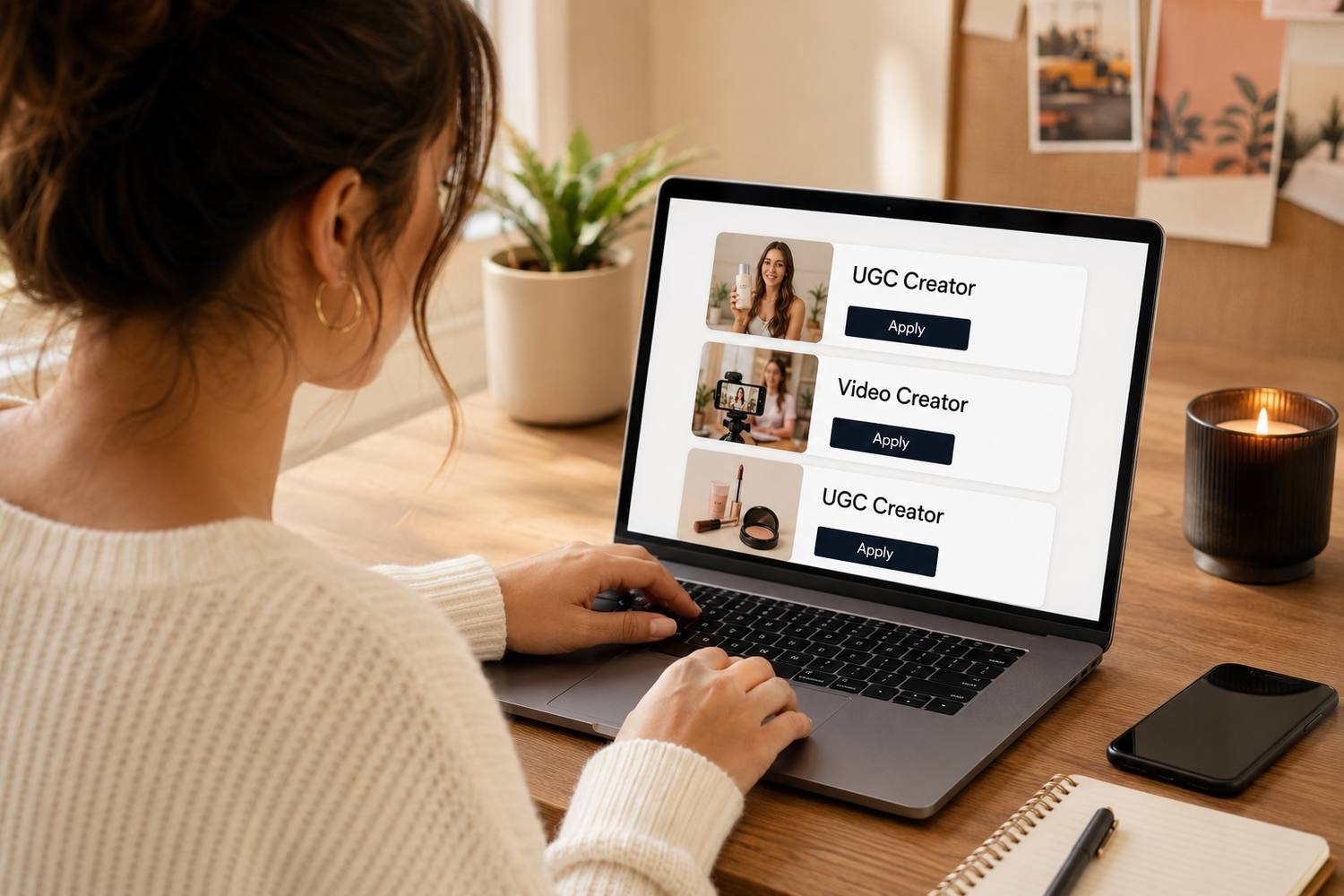
Marketplaces, job boards, and direct outreach all list new UGC jobs daily.
1. UGC marketplaces and platforms
These are platforms built specifically to connect brands with UGC creators, and they list new UGC creator jobs daily. You create a profile, brands post briefs, and you apply or get matched. The big names right now include Billo, Twirl, Insense, and Collabstr. Backstage also runs a steady stream of UGC casting calls.
The honest tradeoff: these platforms are crowded, and the briefs often pay on the lower end because brands know they have hundreds of applicants. They're a fine place to get your first few paid pieces and build a portfolio. They're a rough place to build a career, because you're competing on price in someone else's marketplace.
2. Freelance job boards
Upwork, Fiverr, LinkedIn, and Indeed now list thousands of remote UGC jobs. Search "UGC creator" and filter for remote. These gigs skew toward brands that want ongoing content (think 4 to 8 videos a month), which can turn into the steady retainer work that makes this sustainable.
One tip: on general job boards, your proposal is everything. Brands posting there usually aren't deep in the creator world, so a clear, professional pitch with a portfolio link wins against creators who just send a rate.
3. Social search (this is underrated)
Brands and agencies post UGC calls constantly on X and TikTok. Search "#ugccreator," "UGC creators wanted," or "looking for UGC" and sort by recent. The r/UGCcreators community on Reddit is also worth joining, both for job leads and for honest conversation about which brands pay fairly and which ones don't.
4. Pitching brands directly
This is where the best-paying UGC jobs live, and it's the route most creators skip because it feels intimidating. Find brands already running UGC-style ads in your niche (scroll their Instagram ads or the TikTok Creative Center), then send a short pitch with one or two relevant examples. Direct deals mean no marketplace competition and no race to the bottom on price.
If outbound pitching sounds like a lot of work, that's because it is. It's also exactly the part Trovio was built to handle: finding brands that fit you, building the materials, and helping you pitch. And because Trovio isn't an agent, there's no percentage coming out of your deals. You keep 100% of what you earn from brand partnerships.
UGC Jobs for Beginners: What You Need (No Experience Required)
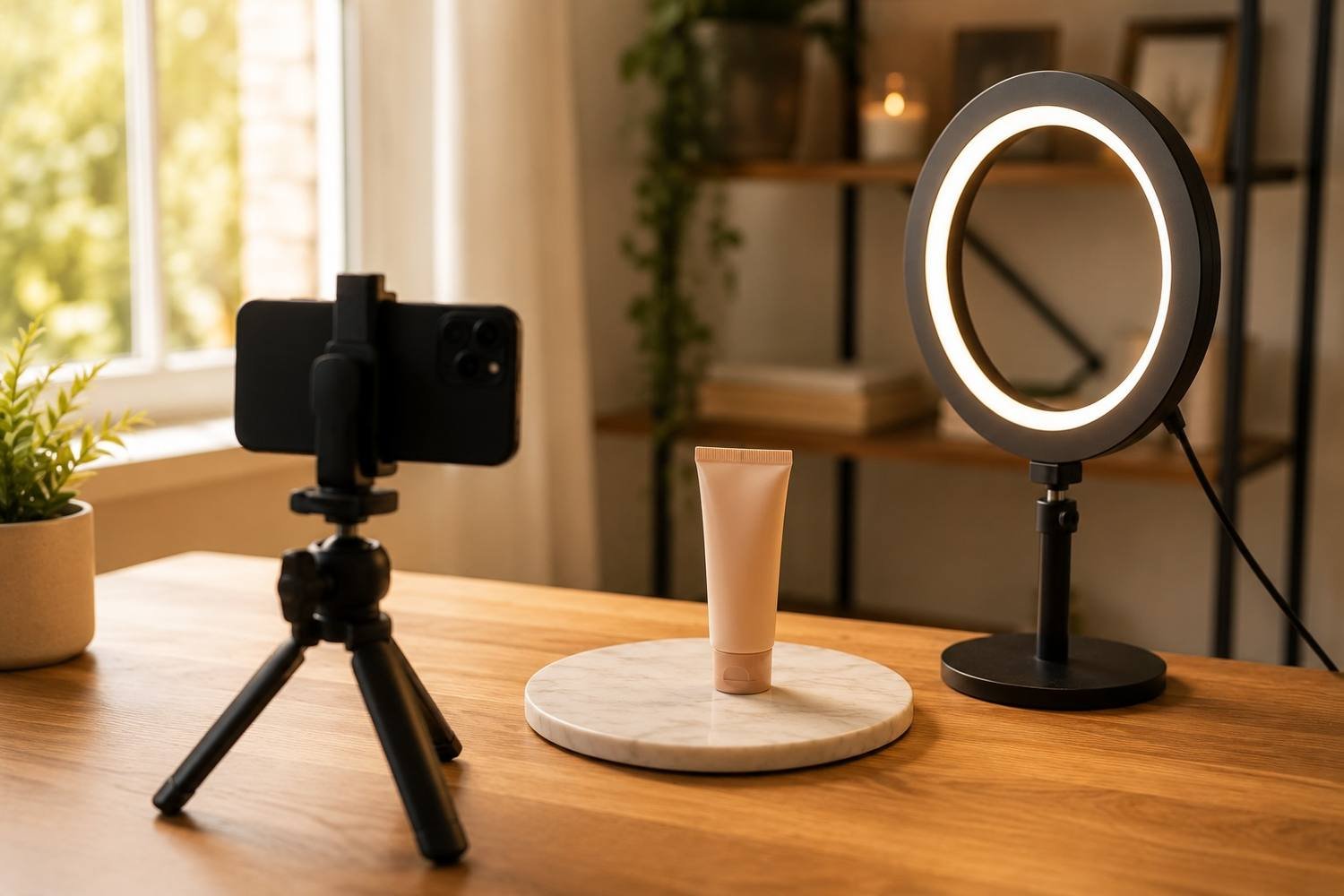
A phone, a ring light, and a product you already own is enough to start landing UGC jobs.
You can land UGC jobs with no experience, but not with no preparation. Three things separate creators who get responses from creators who get ignored:
A portfolio. Even three strong example videos is enough to start. Make them for products you already own. Brands don't care that nobody paid you for them; they care whether you can make content that sells.
A media kit. For UGC, this is less about audience stats and more about your content style, niches, and deliverables. Here's our full media kit guide if you're starting from scratch.
A rate card. Know your prices before a brand asks, because they will ask, and "what's your budget?" is a weak answer. Our rate card guide walks through building one that actually lands deals.
What Do UGC Jobs Pay?
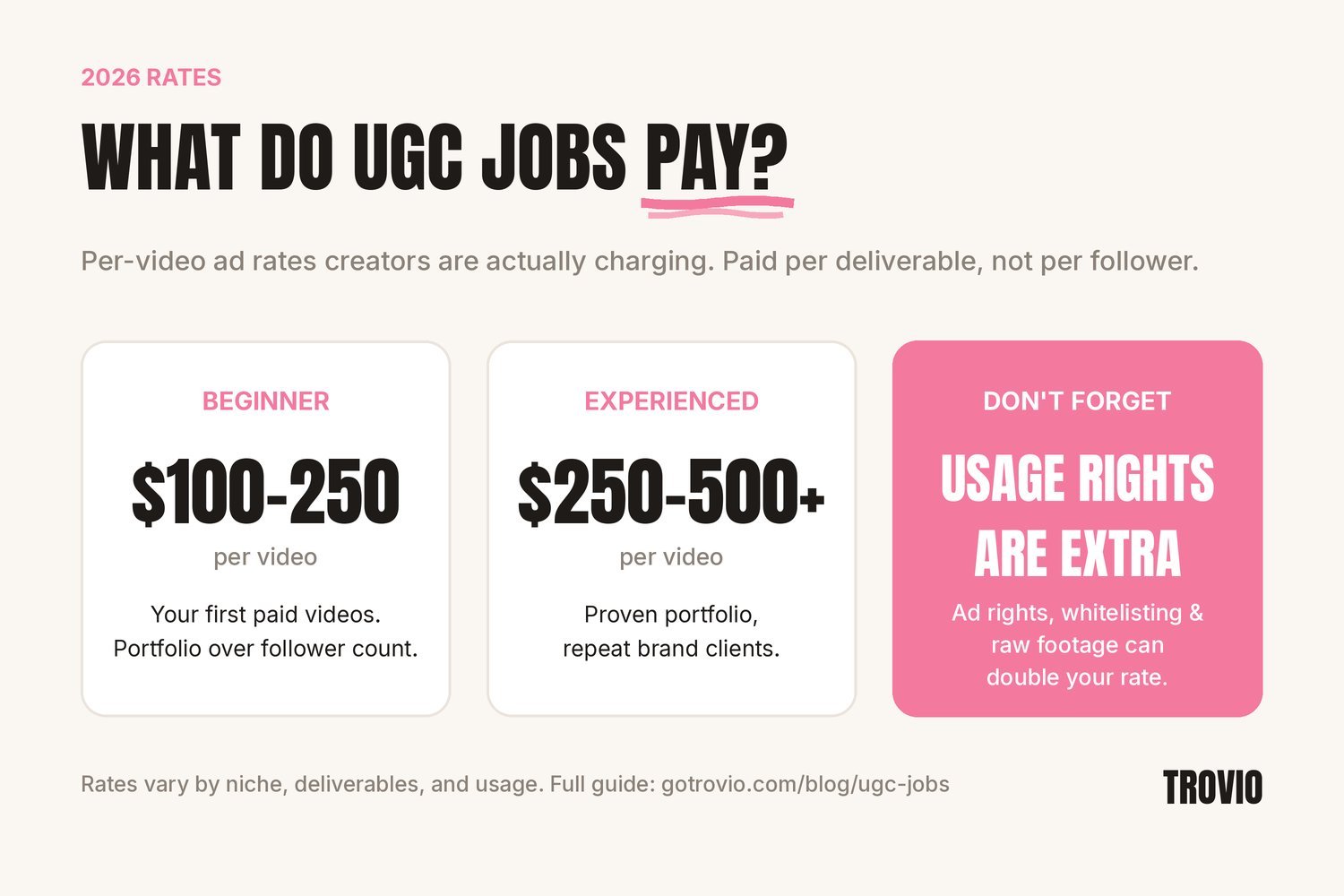
Typical per-video UGC rates in 2026. Usage rights and whitelisting always cost extra.
Rates vary a lot, but as a rough 2026 picture: beginner UGC videos tend to land in the $100 to $250 range per video, experienced creators charge $250 to $500+, and usage rights, ad rights, and raw footage all cost extra (and should). Whitelisting and paid ad usage can double a rate or more.
The biggest pricing mistake new UGC creators make is treating the first number a brand offers as the ceiling. It's an opening offer. For a deeper breakdown of pricing logic, including usage rights and negotiation, read our guide on how much to charge for a brand deal.
How to Actually Land Your First UGC Job
- Pick one niche to start. "I make UGC for everyone" converts worse than "I make UGC for fitness and wellness brands." You can expand later.
- Make 3 to 5 spec videos. Real products, real hooks, shot on your phone. This is your portfolio.
- Apply in volume, pitch with specificity. Apply to platform briefs and job board listings to get reps, but send 5 direct pitches a week to brands you'd genuinely want to work with. Direct outreach is slower and pays better.
- Deliver fast and clean. UGC is a repeat-business game. Brands that like working with you will come back monthly, and retainers are where this goes from side income to real income.
- Raise your rates as your portfolio grows. Every few deals, revisit your rate card. Demand for good UGC keeps growing, and creators of all sizes are underpricing themselves.
UGC Jobs FAQ
Can I get UGC jobs with no followers? Yes. Brands hiring UGC creators are buying content, not access to an audience. A portfolio of 3 to 5 strong example videos matters far more than your follower count.
How much do UGC jobs pay? Most beginner UGC videos pay $100 to $250, with experienced creators charging $250 to $500+ per video. Usage rights and ad whitelisting cost extra.
How do I get my first UGC job with no experience? Make spec videos for products you already own, build a simple portfolio and rate card, then apply to platform briefs while pitching a few brands directly each week.
The Bottom Line
UGC jobs are real, they're growing, and the barrier to entry is lower than almost anywhere else in the creator economy. The work is finding them and pitching consistently, week after week. Do that part manually if you have the time. Or let Trovio do the finding and pitching for you while you focus on making the content. Either way, the brands are out there hiring. Go get paid.
Have questions or want to talk UGC strategy? Email me anytime at andrew@gotrovio.com